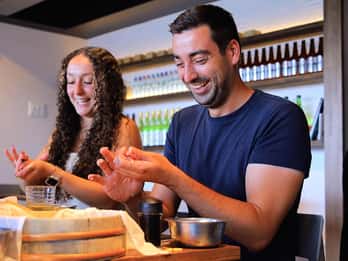
Rolls and nigiri, not Osaka’s pressed sushi
Nigiri, a slice of topping on a hand-pressed ball of rice, became popular in Edo, today’s Tokyo, in the 1820s and 1830s. Osaka’s own style is oshizushi: rice and toppings are pressed into a wooden box, the oshibako, and cut into blocks. Battera, pressed mackerel, is the best-known kind, and the toppings in oshizushi are cured or cooked rather than raw.
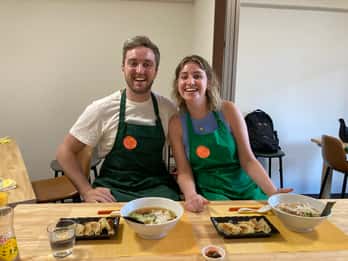
The class in Shinsaibashi teaches the two styles visitors know best, rolls and nigiri. Pressed sushi appears on one other class on this site: Cooking Sun in Namba lists a wagyu oshizushi menu as an alternative to its ramen and gyoza class. It is shown below the sushi class.
Diet menus with three days’ notice
The listing offers vegan, vegetarian, gluten-free and halal menus. The condition is time: tell the operator at least three days before the class. Book later than that and the listing makes no promise of a special menu.
Halal here describes the food, not the room. A guest who booked for the halal menu writes that her group was seated at a table where other participants were drinking alcohol. If a separate table matters to you, ask for it when you send the diet request. The diet guide compares all tours and classes on the four diets.
What guests would change
The comments on this class are mostly about pace. One guest wanted a little more time for the nigiri, another small bowls for the sauce instead of sauce on top of the nigiri, and a third found the session rushed, close to a production line. With 100 minutes for two techniques, expect a brisk class rather than a slow lesson.
Getting there
Like several Osaka listings, this one mentions hotel pickup, but the class starts at the building. Plan to get there on your own and take the lift to the third floor.
If you want to see the fish before you shape it, Kuromon Market is about ten minutes on foot from Namba Station and busiest with fresh produce in the morning.
For ramen, takoyaki and the other kitchens in town, see all Osaka cooking classes.