Takoyaki, an Osaka invention of 1935
A street vendor in Osaka, Tomekichi Endo, is credited with inventing takoyaki in 1935. He drew on older snacks: radioyaki, a batter ball with beef or konjac sold in Osaka, and akashiyaki, an egg-rich octopus dumpling from the town of Akashi. The balls are cooked in a pan with half-round hollows, then brushed with sauce and mayonnaise and finished with aonori seaweed and bonito flakes.
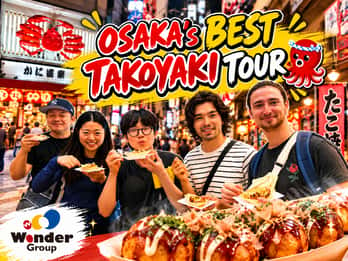
That pan is why the tasting walk works the way it does. Takoyaki stands in Dotonbori sit close together, and the walk stops at five shops in two hours, with two takoyaki at each. Drinks are not included, and the listing says the walk is not suitable for anyone with a food allergy. You meet at Exit 25 of Namba Station, by the Dotonbori sign.
Making them at the hot plate
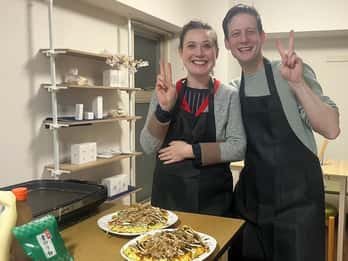
The XLSWORLD class in Bakuromachi is the one to book if you want both dishes. You make okonomiyaki and takoyaki, eat them with sake or beer, and should expect about three hours although the listing says two. The class takes place in room 303 of a residential building; ring the bell for 303.
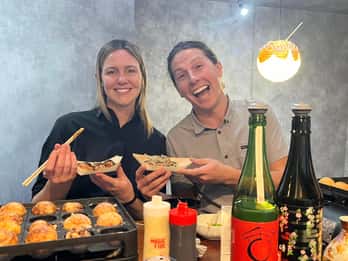
MOMO TO SAKE turns takoyaki into the food side of a sake tasting. A sake sommelier guides you through a choice of more than ten sakes, and you cook takoyaki to go with them, with premium toppings such as wagyu, in a group of no more than 6. The room is on the second floor in a side lane in Namba, and reviewers say it is easy to walk past, so leave a few minutes spare.
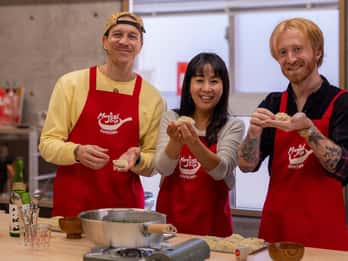
The home-style class covers okonomiyaki as one of three dishes, after shopping for ingredients in a local supermarket, and ends with them as lunch. Children from 6 can join, though knives and the hot plate are for ages 12 and up. It is the longest option at four hours and the right choice if you want to learn a home menu rather than street food.
Mixed in Osaka, layered in Hiroshima
Okonomiyaki in Osaka is made by stirring cabbage and the other fillings into the batter before it goes on the griddle. Hiroshima builds the same dish in layers, with noodles. If your route continues west, the guide to day trips to Hiroshima and Miyajima covers that side of the comparison.
You can also grill okonomiyaki on a guided evening: the kushikatsu and okonomiyaki tour starts in Shinsekai and ends at a griddle in Dotonbori. It is listed with the other Shinsekai food tours.
Octopus, wheat and allergies
Tako means octopus, so takoyaki are not vegetarian, and both dishes are built on wheat batter, which rules out a gluten-free diet. None of the listings on this page offers a gluten-free option. Only the soul food class takes vegetarians, with a day’s notice, and the tasting walk excludes guests with food allergies outright. If that affects your group, the diet guide lists the classes that do adapt, such as the sushi class with its set menus.
After a takoyaki evening in Dotonbori, the bar crawls start a few streets away at the Glico sign and at the Apple store in Shinsaibashi.
For ramen, sushi and the other classes in the city, see all Osaka cooking classes.